The attire of the traditional scarlet coats is only worn by huntsmen, masters, whippers-in and other hunt staff members. They are known as Pinks or Pinques. It is a symbol of heritage and distinction, not worn by everyone, but earned and worn with pride. Many believe it is named after a 18th-century London tailor named Mr. Pink, who allegedly specialized in these coats. Another theory suggests it came from red coats that faded to a pinkish hue after years of washing.
“The Three Huntsman” captures the dichotomy between light and shadow and geometric and organic shape. It is completed in a looser style, thereby allowing these shapes to drive the underlying narrative.
Reference image by Georgina Preston.
Comes signed, dated, and with a certificate of authenticity. International orders are responsible for their countries customs and fees.
The attire of the traditional scarlet coats is only worn by huntsmen, masters, whippers-in and other hunt staff members. They are known as Pinks or Pinques. It is a symbol of heritage and distinction, not worn by everyone, but earned and worn with pride. Many believe it is named after a 18th-century London tailor named Mr. Pink, who allegedly specialized in these coats. Another theory suggests it came from red coats that faded to a pinkish hue after years of washing.
“The Three Huntsman” captures the dichotomy between light and shadow and geometric and organic shape. It is completed in a looser style, thereby allowing these shapes to drive the underlying narrative.
Reference image by Georgina Preston.
Comes signed, dated, and with a certificate of authenticity. International orders are responsible for their countries customs and fees.
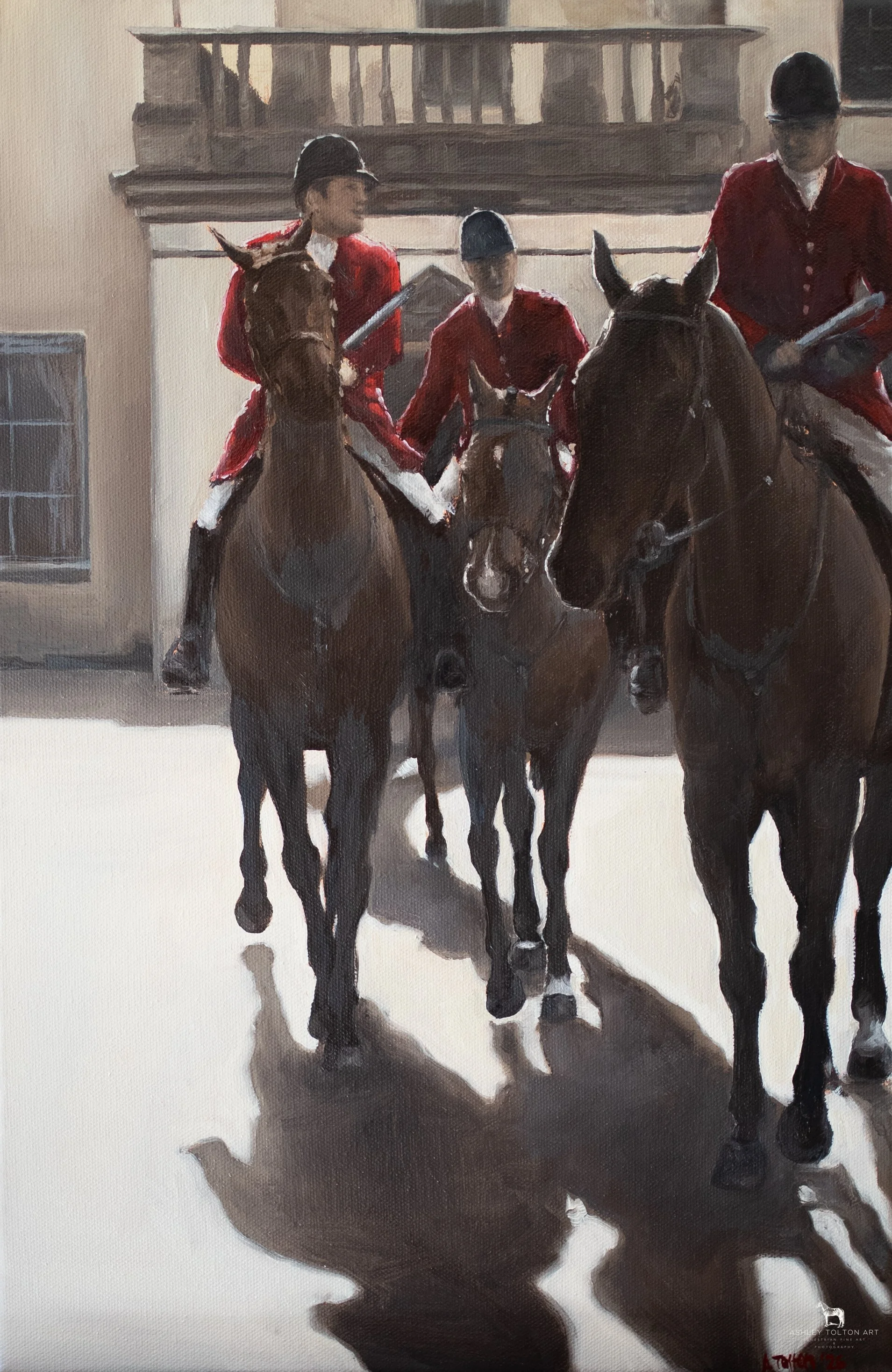 Image 1 of 5
 Image 2 of 5
 Image 3 of 5
 Image 4 of 5
 Image 5 of 5
